Stop Apologizing for What You Watch: America's Long-Overdue Embrace of Joyful Pop Culture
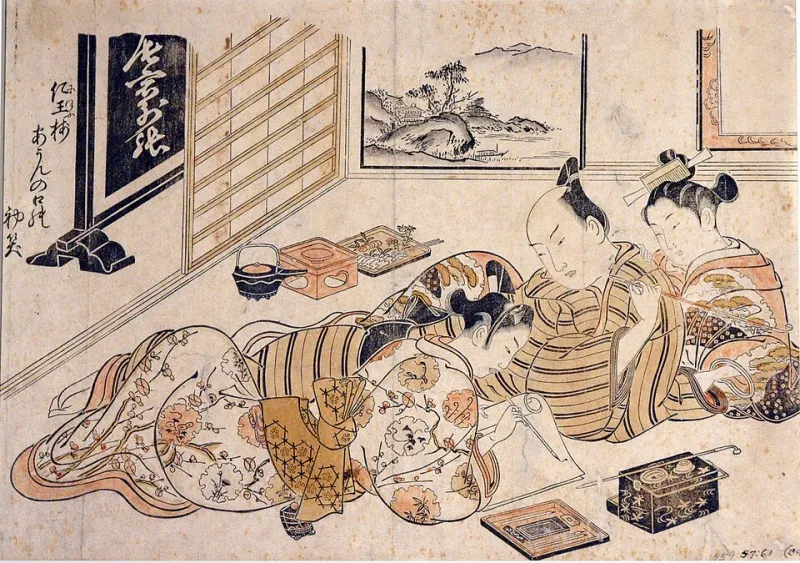
Photo: thesandiegomuseumofartcollection, Public domain, via Wikimedia Commons
Let's be honest: you've done it. You've prefaced a recommendation with "okay, it's kind of trashy, but..." or laughed off your obsession with a reality show like it was a character flaw you were confessing to. We all have. For a long time, that disclaimer was just part of the ritual — a way of signaling that you knew better, even if your watch history told a different story.
But something's changing. Quietly, then all at once, Americans have started dropping the apology.
The Phrase That Needs to Die
"Guilty pleasure" is a strange little construction when you think about it. Guilt belongs to moral failures — lying, hurting people, eating your roommate's leftovers. It probably shouldn't apply to watching Love Is Blind on a Tuesday night. And yet for decades, it's been the go-to framing for anything deemed too lowbrow, too feminine, too commercial, or too just-for-fun to be admitted without a caveat.
The implication was always clear: real culture — the stuff that matters — was serious, difficult, and probably a little boring. Everything else was a guilty indulgence, fine in private but embarrassing in public. Liking Taylor Swift unironically? Guilty pleasure. Devouring romance novels by the dozen? Guilty pleasure. Knowing every cast member on every Bravo franchise? Definitely a guilty pleasure.
Except none of that was ever actually true. It was just a way of enforcing a hierarchy — of deciding whose tastes counted and whose didn't.
The Shift Happening in Real Time
Younger Americans, particularly Gen Z and younger millennials, are calling out that hierarchy by simply refusing to participate in it. The fan communities thriving on TikTok, Tumblr, and Reddit aren't treating their enthusiasms as embarrassing secrets — they're building entire identities around them, loudly and proudly. BookTok turned romance novels into a publishing phenomenon. Reality TV recaps are prestige content. Pop music criticism has never been more serious or more widely read.
"There's been a real generational shift in how people relate to their own taste," says media scholar and cultural commentator Dr. Priya Nair, who studies American entertainment trends. "Younger audiences grew up in an environment where fan culture was visible and celebrated. They don't have the same relationship to shame around popular entertainment that older generations do. For them, loving something enthusiastically isn't a personality flaw — it's the whole point."
The streaming era accelerated this in a big way. When Netflix drops a pulpy thriller or a deeply silly dating show, it doesn't get buried in the cable guide — it sits right next to the prestige dramas and the Oscar-bait documentaries, on the same platform, with the same interface. The algorithmic leveling of content has made it harder to maintain the old hierarchies. Everything is just... there. And people are watching all of it.
Who Decided What Was 'Good' Anyway?
Here's the part worth sitting with: the categories of "high" and "low" culture were never neutral. They were shaped by race, gender, and class in ways that are pretty uncomfortable to look at directly.
The things most often labeled guilty pleasures — romance novels, soap operas, pop music, reality TV — have historically been associated with women, with working-class audiences, with Black and Latino communities. Meanwhile, the "serious" culture that required no apology — literary fiction, jazz, arthouse cinema, prestige television — has generally centered the tastes of educated, upper-middle-class white men.
That's not a coincidence. And recognizing it changes the whole conversation. When someone calls a romance novel a guilty pleasure, they're not just making a comment about literary quality — they're participating in a longer history of dismissing the things women enjoy as inherently less valid.
The current pushback isn't just about people feeling more comfortable with their Netflix queues. It's about a broader democratization of cultural authority — the idea that taste isn't something handed down by critics and gatekeepers, but something that belongs to everyone.
The Critics Are Catching Up
Pop culture criticism has had to adapt fast. Entertainment journalists who once maintained a careful distance from anything too mainstream have found that audiences aren't interested in that pose anymore. The most-read pieces about television aren't always about Succession or The Bear — sometimes they're about Vanderpump Rules or The Bachelor, analyzed with the same rigor and genuine investment.
And why not? A show that millions of people watch and talk about every week is, almost by definition, culturally significant. The old critical reflex of dismissing popular things as beneath analysis was always a little intellectually dishonest — a way of protecting the critic's own status rather than actually engaging with what's happening in the culture.
"The best criticism has always followed the audience," says Nair. "What's changed is that there are now platforms — podcasts, newsletters, social media — where critics can engage seriously with popular content without having to justify it to an editor who thinks it's beneath the publication. That's freed up a lot of really smart analysis."
Joy as a Legitimate Response
Maybe the most radical thing about this cultural shift is the simplest: the idea that enjoying something — really, unabashedly enjoying it — is enough. You don't need to justify your entertainment choices by explaining that they're actually smarter than they look, or that you're watching them ironically, or that you feel a little bad about it afterward.
Something can be silly and wonderful. It can be predictable and comforting. It can exist purely to make you happy, and that can be the whole review.
America is slowly, imperfectly, working through its relationship with joy — and learning that pleasure doesn't need a permission slip. The guilty pleasure isn't dead yet, but it's on the way out. And honestly, it's about time.
Watch whatever you want. Read the romance novels. Know all the words to the pop song. The only thing you owe anyone is honesty — and you don't owe them the apology.