You're Always Reachable and Somehow More Alone Than Ever
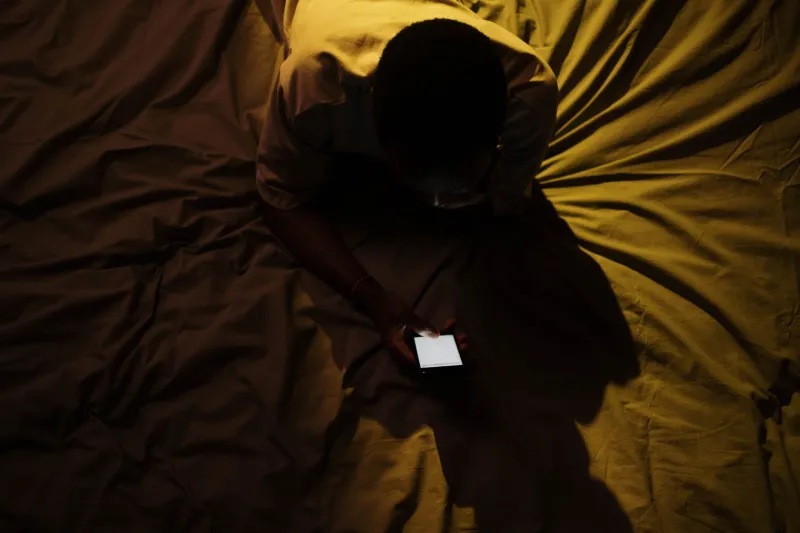
Your phone buzzes. It's the group chat — the one with twelve people in it, the one that was supposed to keep everyone close after college, after the move, after life scattered everybody in different directions. Someone sent a meme. Three people reacted with a laughing emoji. Then silence again for another six hours.
You put the phone down feeling, somehow, more alone than before you picked it up.
This is the strange paradox sitting at the center of American social life right now. We are, by every measurable standard, more connected than any generation in human history. We have texting, group chats, voice notes, Instagram DMs, Snapchat streaks, FaceTime, Discord servers, and half a dozen other platforms designed specifically to keep us tethered to the people we care about. And yet loneliness rates in the US have been climbing steadily for years. The surgeon general literally issued an advisory about it in 2023, calling it an epidemic. Something is not adding up.
The Difference Between Contact and Connection
Here's the thing that nobody really wants to say out loud: staying in touch is not the same thing as actually connecting. They feel similar — they're supposed to feel similar, that's kind of the whole pitch of every social app ever built — but they operate on completely different emotional frequencies.
Real connection involves being known. It means someone understanding not just what you said, but why you said it, what you left out, what your face looked like when you were saying it. It involves the kind of messy, unedited presence that's almost impossible to transmit through a screen. When you're sitting across from a friend at a diner booth at 11pm, you're getting all of it — the hesitation, the laugh that doesn't quite reach their eyes, the moment they change the subject because something is too hard to talk about yet. You read between the lines in real time.
Text strips most of that out. What you're left with is a curated, compressed version of a person, arriving in fragments throughout the day. It's not nothing — it genuinely isn't — but it's also not the same thing as being truly seen by someone. And when you spend most of your social energy on the compressed version, the real version starts to feel unfamiliar, even uncomfortable.
Why Group Chats Are Especially Tricky
Group chats deserve their own category of analysis here, because they've become the primary social infrastructure for a huge chunk of American friendships and they have some specific, structural problems.
First, there's the audience effect. When you're talking to twelve people at once, you're performing slightly. Even with your closest friends, the dynamic of a group shifts what you're willing to say and how you say it. Vulnerability is harder. Nuance gets flattened. The things you'd actually tell your best friend one-on-one — the real stuff, the embarrassing stuff, the stuff you're still figuring out — don't tend to survive the group chat format. So instead you send the meme. You react with a laughing emoji. You keep it light.
Second, group chats create the illusion of maintenance without the substance of it. If the chat is active, you feel like you're keeping up with your people. You're present, technically. You saw what they posted. You know they're alive and doing things. But that's a very low bar, and somewhere underneath the notifications, some part of you knows it. The chat becomes a substitute for the conversation you keep meaning to have.
Third — and this one stings a little — group chats can actually make you feel more excluded, not less. When the chat goes quiet after you say something, or when a side conversation clearly happened somewhere else, or when people make plans in the thread that you weren't invited to, the rejection is right there in your pocket. Immediate. Documented. You can scroll back and read it.
What We Traded Without Realizing It
There's a generational dimension to this worth sitting with. For older millennials and Gen X, the shift to digital-first socializing happened gradually, over a decade or so. There was a before. They remember making plans by actually calling someone, showing up without confirmation, spending time together without documenting any of it. The contrast is legible to them.
For a lot of younger Americans, though, the hyperconnected version of friendship is simply the water they've always swum in. The idea of friendship being something that primarily happens in physical space, spontaneously, without a thread of prior communication — that's almost foreign. And that's not a judgment, it's just a reality worth acknowledging. When the only model you have for closeness is digital closeness, you might not even have the vocabulary to name what's missing.
What's missing, often, is friction. The good kind. The kind that comes from being physically present with someone when it's inconvenient, when nobody's performing, when you're both just existing in the same space without an agenda. That friction is where intimacy actually gets built. And it's hard to manufacture through a screen.
The Opt-Out Problem
Here's what makes this genuinely hard to solve: opting out feels like opting out. If you stop responding to the group chat, you're the one who went quiet. If you suggest that everyone put their phones away at dinner, you're the one making it weird. The social cost of resisting hyperconnectivity is real, because the infrastructure is so thoroughly built around it now.
And yet more and more people are quietly experimenting with pulling back — not in a dramatic digital detox way, but in small, deliberate ways. Making one phone call instead of sending three texts. Suggesting a walk instead of a DM exchange. Letting the group chat go unanswered for a day without the anxiety spiral. Prioritizing the one person they actually want to talk to over the twelve-person thread where nobody's really saying anything.
None of this is revolutionary. It's actually kind of old-fashioned. But that might be exactly the point.
You Don't Need More Ways to Reach People
The apps will keep coming. New platforms will promise better connection, more authentic interaction, smarter ways to stay close to the people you love. Some of them will be genuinely useful. But the loneliness problem isn't going to be solved by a better interface.
Being understood by another person is slow work. It requires showing up, being present, tolerating the awkward silences, having the conversation that doesn't have a clean ending. It requires time spent together that isn't optimized for anything.
Your group chat is probably not going anywhere. But maybe the next time you feel that particular hollow buzz of being constantly reached and somehow deeply alone — maybe that's the moment to close the app and call someone instead. Not to text. To actually call. Or better yet, to show up.
That's still allowed. It always was.