Being Real Is the New Fake: How Vulnerability Became a Content Strategy
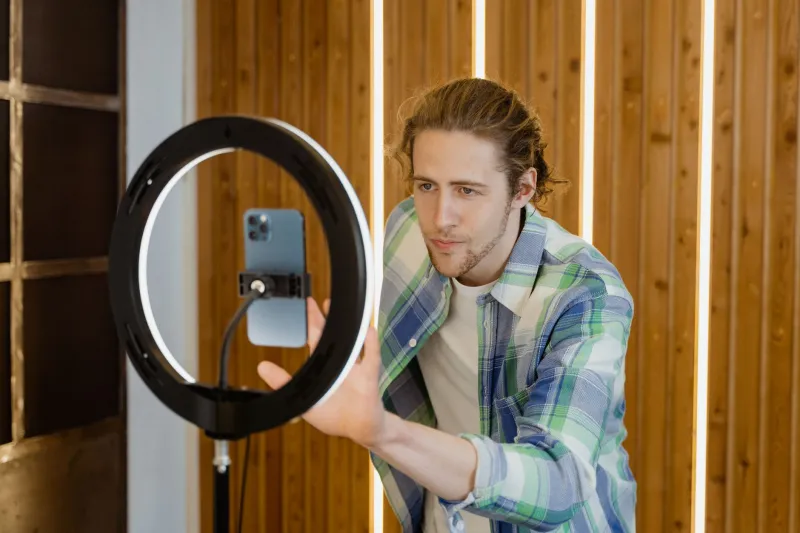
The messy room photo. The no-makeup selfie. The caption that starts with "I don't usually share this, but..." We've seen so much of it that we've stopped asking whether any of it is actually true. Somewhere between the first confessional Instagram post and the ten-thousandth "unfiltered" TikTok, being authentic stopped being something you were and became something you performed.
And the wild part? Most of us know it. We know it while we're watching, and somehow, we keep watching anyway.
The Vulnerability Industrial Complex
There's a particular kind of content that dominates right now — the kind where someone sits in their car, eyes a little glassy, and tells the camera something heavy. Or posts a photo of their apartment mid-chaos with a caption about mental health. Or drops a thread about how they almost gave up on everything before things turned around.
It's compelling. Sometimes it's even genuinely moving. But it's also, increasingly, a formula.
Brands figured this out years ago. "Relatability" became a marketing strategy before most people even noticed the shift. Companies started posting about their failures. Influencers started showing their stretch marks. Founders started tweeting about their darkest moments — conveniently timed to a product launch or a funding announcement. The message was always the same underneath: trust me because I'm being real with you.
Except you can't manufacture realness. Or rather — you can, and people are, constantly, and that's exactly the problem.
When Imperfection Gets Optimized
Here's the thing nobody wants to say out loud: the messy aesthetic has a look. The "I woke up like this" selfie has lighting. The brutally honest caption gets drafted, revised, and sometimes A/B tested. The crying video is posted at peak engagement hours.
This isn't a conspiracy. It's just what happens when vulnerability meets an algorithm. Authenticity, the moment it starts performing well, gets reverse-engineered. Creators study what kind of honesty lands. They learn which confessions get saved, which ones get shared, which ones drive follows. And then — consciously or not — they start producing more of that specific flavor of real.
The result is a strange, funhouse-mirror version of human emotion: feelings that look right, that hit the familiar beats of vulnerability, but have been smoothed and shaped to fit a platform's preferences. It's not lying, exactly. It's something more unsettling — truth that's been edited for performance.
The Exhaustion Nobody Talks About
If you've ever felt vaguely tired after scrolling through a bunch of "real" content, you're not imagining it. There's a particular kind of drain that comes from processing emotional information at scale — from watching person after person open up, share something raw, invite you into their struggle — when you can't fully tell what's genuine and what's calibrated.
Your brain is doing real emotional work in response to content that may or may not be emotionally real. That gap is exhausting in a way that's hard to name.
And then there's the pressure it creates on regular people — not influencers, not brands, just people with phones — to perform their own authenticity. If everyone around you is sharing their mess, your curated highlight reel starts to feel dishonest. So you share something vulnerable too. But now you're thinking about how it'll land. You're choosing which flaw to show. You're crafting the caption.
You're performing realness. And you know it. And somehow that makes the whole thing feel worse.
Can You Even Be Genuinely Vulnerable Online Anymore?
This is the question that doesn't have a clean answer. Because real vulnerability does exist online — it just lives in comments sections, in DMs, in small accounts nobody's optimizing. It exists in the post that gets twelve likes from people who actually know the person. It exists before someone figures out that their pain has an audience.
The second vulnerability scales, something changes. Not always, not for everyone — but often enough that it's worth noticing. The moment you become aware that your realness is being received, consumed, responded to, you start making choices about it. And choice is the beginning of performance.
That doesn't make the emotion fake. But it does make the presentation of it something other than unfiltered.
What We're Actually Hungry For
The reason the vulnerability aesthetic keeps working — even when we're suspicious of it, even when we can see the seams — is that it's pointing at something real that most of us are genuinely starving for: the feeling that someone else is struggling too, that the polished version of life isn't the only version, that connection is possible even across a screen.
We want that so badly that we'll take a curated version of it. We'll accept the performed mess because the alternative — a feed full of nothing but highlight reels — feels even more isolating.
But there's a cost. When everything gets optimized, including our emotional lives, we lose the ability to recognize the real thing when it shows up. We become fluent in the language of vulnerability without being able to tell whether anyone's actually speaking it.
The Realest Thing You Can Do
Maybe the answer isn't more authenticity content. Maybe it's less. Maybe the genuinely countercultural move right now is to keep some of your mess offline — not because you're hiding it, but because not everything needs an audience to be real.
Your 3 a.m. anxiety doesn't become more valid because it got 4,000 views. Your grief isn't more legitimate because it made people comment "sending love." The hard stuff in your life is real whether or not you document it, and there's something quietly radical about letting it stay that way.
Being real, in 2025, might just mean not showing everyone. Not every time. Not for the algorithm.
That's the part nobody's figured out how to monetize yet.