Just Tell Me What to Do: The Quiet Rebellion Against Having to Choose Everything
Somewhere between the third time you refreshed a restaurant menu on Yelp and the moment you spent forty-five minutes choosing a Netflix show only to give up and go to bed, something shifted. You didn't want more options. You wanted someone — anyone — to just pick for you.
This is not a personal failure. It's a cultural turning point.
Across the country, a quiet but unmistakable movement is taking shape. Younger Americans especially — the generations who grew up being told that self-determination was the highest virtue — are increasingly, almost desperately, outsourcing their decisions. To friends. To Reddit threads. To TikTok comment sections. To newsletter writers they've never met. To therapists, life coaches, and random strangers who happen to sound confident.
The autonomy era had a good run. But people are tired.
The Weight of the Wheel
Psychologists have a name for what's happening: decision fatigue. The idea is straightforward — the more choices you make, the worse you get at making them. Your mental bandwidth is finite. And in a world engineered to offer you infinite options for everything from your mattress firmness to your oat milk variety, that bandwidth gets torched before noon.
But this goes deeper than just being overwhelmed at the grocery store. What's emerging right now is something closer to a philosophical exhaustion. A generation that was handed the keys to their own identity — told to curate their aesthetic, build their personal brand, define their values, architect their career path, and optimize their lifestyle — is starting to wonder if holding all those keys was ever actually the point.
The pitch was freedom. The reality, for a lot of people, feels more like a second job.
'What Would You Do?' Is the New Google
Look at how people are actually seeking information right now. Google searches are down among younger users. TikTok has become a primary discovery engine not just for products, but for life decisions — where to move, what career to pursue, whether to end a relationship, how to handle a difficult family situation. Reddit's r/Advice and r/AmItheAsshole aren't just entertainment; they're genuinely functioning as decision-support systems for millions of people.
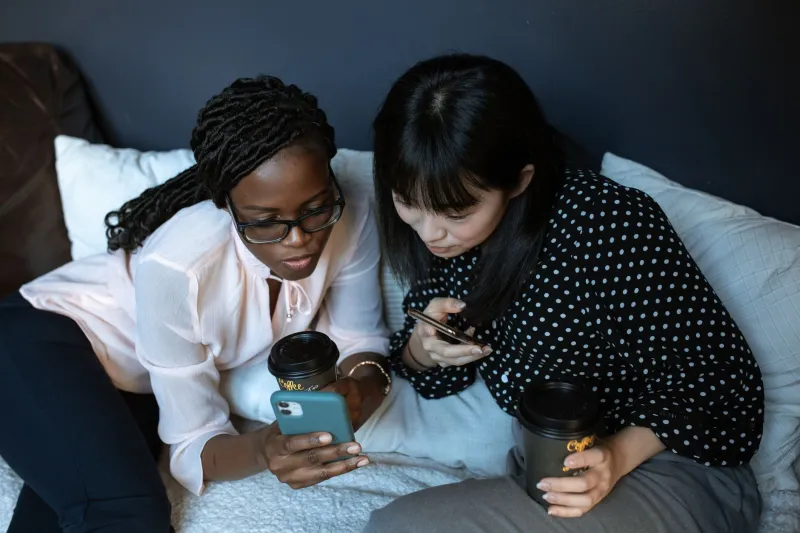
And then there's the return of the recommendation. Not the algorithm-generated kind, but the human kind. "Just tell me what to order" has become a legitimate dining request. "What would you do if you were me?" is back as a sincere question rather than a rhetorical one. People are texting friends not to vent, but to get a verdict.
This isn't laziness. It's a recalibration. When every choice has been reframed as a reflection of your identity and values, making a decision stops feeling casual. It starts feeling like a statement. And sometimes you just want a burrito without it meaning something.
The Expert Is Back in Style
There's a parallel resurgence happening in how Americans relate to expertise. After years of "do your own research" culture and reflexive skepticism toward authority, something is shifting back. People are paying for advice again — not just financial advice, but life advice. Personal stylists are having a moment. Nutritionists who actually tell you what to eat (rather than just presenting options) are in demand. Therapists who offer more directive guidance are increasingly preferred over purely reflective approaches.
Even in fashion, the appeal of a curated wardrobe service — where someone else selects what you wear — has moved from niche luxury to mainstream aspiration. The fantasy isn't just convenience. It's relief. Someone who knows things, making choices on your behalf, so you don't have to.
This is a meaningful cultural signal. For the better part of a decade, the dominant message was that no one knows you better than you know yourself, and therefore no one is better positioned to make decisions for you. That message is getting a serious audit.
Autonomy Was Never the Whole Story
Here's the thing that the self-optimization era kind of glossed over: humans are not wired to function as isolated decision-making units. We are deeply social animals. Historically, enormous portions of daily life — what to eat, who to marry, where to live, how to dress, what to believe — were structured by community, tradition, and shared norms. That structure wasn't always good. A lot of it needed to be dismantled. But it did provide something real: cognitive relief.
When you grow up in a context where certain things are simply done a certain way, your brain doesn't have to burn energy relitigating them. The mental space that frees up can go toward other things — creativity, connection, depth of experience.
Stripping away all external structure in the name of radical personal freedom sounds liberating in theory. In practice, it can feel like being handed a blank canvas every single morning and told to paint something meaningful before breakfast.
The New Ask Isn't Weakness — It's Wisdom
What's interesting about the current moment is that asking for guidance is being slowly, cautiously reframed — not as a sign of indecision or weakness, but as a form of self-awareness. Knowing when you're tapped out, knowing when a trusted outside perspective will get you somewhere faster than another hour of internal deliberation — that's increasingly being recognized as a skill, not a shortcoming.
The people leaning into this shift aren't abandoning agency. They're being selective about where they deploy it. They're deciding which decisions are worth their full attention and outsourcing the rest — not because they don't have opinions, but because they've learned that having opinions about everything is exhausting and, honestly, not that interesting.
There's a version of maturity in that. A willingness to say: I don't need this to be mine. I just need it to be done.
What Comes Next
None of this means the era of personal choice is over. Americans are still, at their core, deeply individualistic. The hunger for self-expression isn't going anywhere. But the way that hunger gets satisfied might be evolving.
Maybe it looks like being very intentional about the handful of things that genuinely matter to you — your work, your relationships, your creative life — and letting someone else handle the playlist. Maybe it looks like building tighter communities where decisions get made collectively and no one person has to carry the full cognitive load alone.
Or maybe it's simpler than that. Maybe it just looks like calling a friend, describing your situation, and actually listening when they tell you what to do.
After years of being the architect of your own everything, that might be the most radical thing you can do.