Jack of All Trades, Master of Now: The Unexpected Comeback of Knowing a Little About Everything

Remember when having a "personal brand" meant you did exactly one thing, and you did it loudly, constantly, and with an air of total authority? The personal finance guy. The minimalist design girl. The sourdough account that somehow became a lifestyle empire. The internet spent the better part of a decade rewarding people who went narrow and deep — who could tell you, with complete conviction, that this was their whole thing.
That era isn't dead. But it's getting seriously crowded out.
Because right now, quietly and then all at once, the generalist is having a moment. And not in the apologetic, "I'm still figuring it out" way. In the confident, intentional, this is a flex kind of way.
The Niche Trap Nobody Talks About
Here's the thing about hyper-specialization: it works great until it doesn't. Ask anyone who built an identity around a single skill, platform, or trend what happens when the algorithm shifts, the market moves, or they just... get bored. The very thing that made them legible to the internet becomes a cage.
A lot of younger millennials watched this play out in real time — in their own careers, in their feeds, in the burnout stories that started going viral around 2021 and never really stopped. And Gen Z, who grew up watching that cycle, seems to have absorbed a different lesson: betting everything on one lane is actually the risky move.
What's replacing it isn't chaos or aimlessness. It's something closer to the old Renaissance ideal — the idea that a curious, capable person collects competencies the way some people collect sneakers. A little coding. Some graphic design. Enough music theory to be dangerous. Decent at cooking, great at writing, genuinely passionate about urban history. Not a master of any single one, but useful across all of them.
Why Social Media Is Finally Rewarding This
For a long time, the platforms punished breadth. Algorithms favored consistency — same topic, same format, same audience, forever. Creators who hopped between interests got penalized in reach. So the incentive was always to narrow down.
But the content landscape has gotten weird in the best possible way. TikTok, in particular, has created room for people who are genuinely hard to categorize. A creator who posts about ceramics one week, geopolitics the next, and their sourdough disaster the week after that can still build a loyal following — because the common thread isn't the topic, it's the person. Their voice. Their curiosity. Their way of moving through the world.
YouTube's long-form revival has done something similar. Some of the most-watched channels right now belong to people who are just... interested in things. A guy who teaches himself to restore antique furniture, then pivots to explaining Roman aqueducts, then does a video on why American malls died. The audience isn't there for the subject. They're there for the mind.
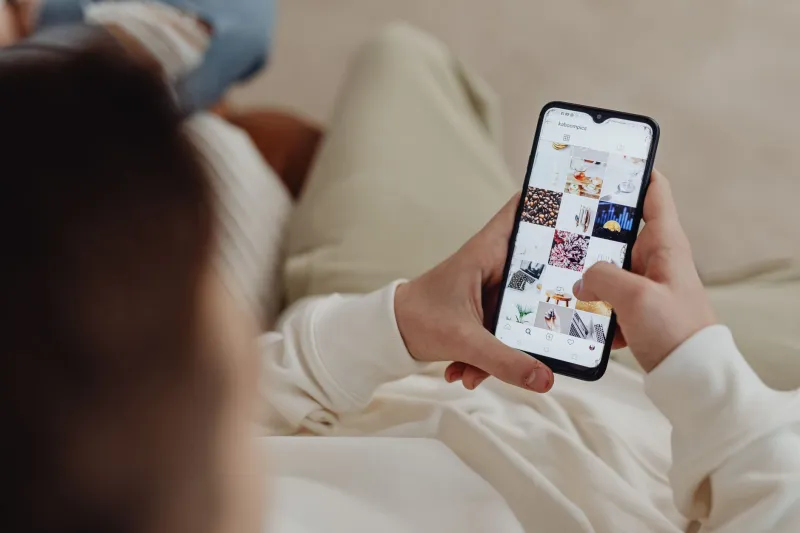
Instagram, weirdly, might be the last holdout of the niche-or-bust mentality. But even there, the "dump" format — casual, mixed, unthemed photo posts — has normalized showing up as a full, multidimensional person rather than a curated content vertical.
The Renaissance Person, Rebranded
There's a reason "polymath" has gone from dusty historical term to genuine aspiration in certain corners of the internet. It's showing up in career conversations, in dating profiles, in how ambitious young people describe what they're working toward. Not "I want to be the best at X" but "I want to be someone who can do a lot of things well."
Part of this is economic pragmatism. The job market has made it pretty clear that a single credential or skill set isn't the safety net it used to be. People who can write and understand data and manage a project and communicate across departments are just more valuable — and more employable — than someone who went incredibly deep in one direction and nowhere else.
But it's also something more personal than that. There's a growing sense that being a specialist, while impressive, can make you a less interesting person to be around. That the most compelling humans are the ones who can talk about architecture and then pivot to explaining why a particular baseball statistic changed the game and then recommend a novel you've never heard of. Range, it turns out, is also a social skill.
Mastery Isn't Gone — It's Just Been Redefined
None of this means expertise is out. Surgeons should still be surgeons. Structural engineers should know their stuff. The argument isn't that depth is bad — it's that depth in one thing and zero curiosity about anything else has started to feel like a limitation rather than a badge of honor.
What's shifting is the definition of mastery itself. A decade ago, mastery meant going so deep into one thing that you became the person everyone called. Now, for a lot of people — especially younger Americans navigating careers that didn't exist ten years ago and won't look the same in ten more — mastery looks like being genuinely capable across a wide surface area. It looks like learning fast, connecting dots across fields, and being comfortable with "I know enough to be useful" rather than "I know everything."
There's even a term floating around productivity circles: "T-shaped skills" — deep in one area, broad across many. But honestly, the generalists having a moment right now are less concerned with the shape of their knowledge and more focused on the texture of their life. They're learning things because they want to. Because it's interesting. Because being a curious person who picks up new skills feels better than being a human content vertical optimized for a single keyword.
The Vibe Shift Nobody Announced
You won't find a press release about this. No trend report officially declared 2024 the Year of the Generalist. But spend enough time in the places where culture actually gets made — group chats, comment sections, the weird corners of YouTube, the newsletters people actually read — and you can feel it.
The pressure to pick one thing and commit to it forever is quietly losing its grip. The people who are interesting to follow, to hire, to be friends with are increasingly the ones who refuse to be reducible to a single category.
Maybe the internet is finally growing up. Or maybe it just got bored of experts and started craving actual humans again.
Either way, if you've been quietly collecting interests with no plan to monetize them or build a brand around them — just because you're curious and alive and the world is genuinely fascinating — this is your moment. The algorithm might be catching up to what you already knew.