Unplugged on Purpose: The Real Reason Americans Are Going Back to Vinyl, Film, and Paper
Something quietly radical is happening across America. People are choosing slower, louder, more inconvenient versions of things they could do instantly on their phones. They're buying turntables for apartments that barely fit a couch. They're finishing a roll of 35mm film and waiting days to find out if any of the shots even worked. They're writing in notebooks with actual pens, like it's 1987 and the cloud doesn't exist yet.
This isn't your parents' nostalgia trip. It's something more deliberate—and more interesting.
The Ping Problem Nobody Wants to Admit
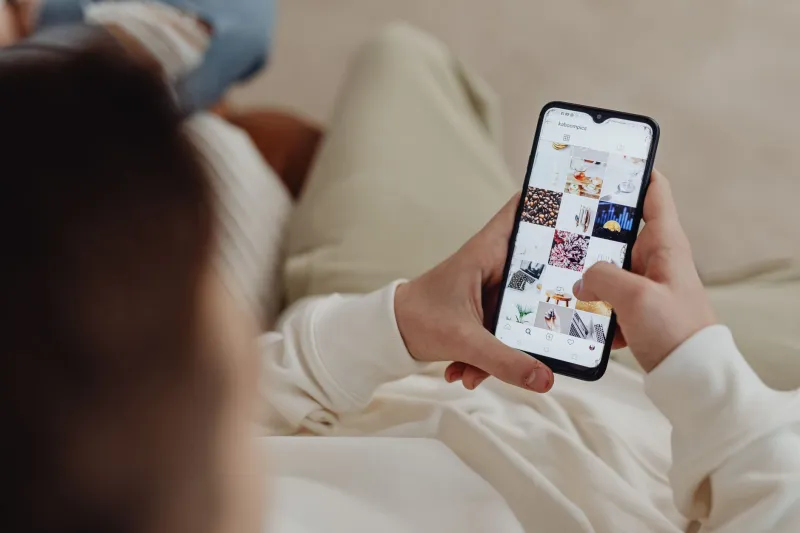
Here's the uncomfortable truth about modern life: we've built an entire existence around devices that are engineered to interrupt us. Your phone buzzes. Your laptop chimes. Your watch taps your wrist. Every app competes for a sliver of your attention, and most of them win. The average American checks their phone somewhere around 96 times a day, according to research from Asurion. That's once every ten minutes.
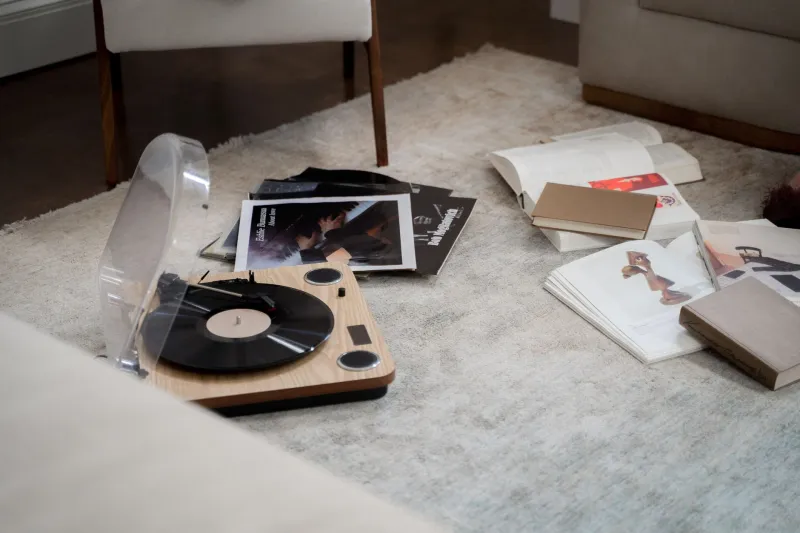
So when someone says they're getting into vinyl records, what they're really saying—even if they'd never frame it this way—is that they want something in their life that doesn't do that. A record player doesn't send notifications. It doesn't suggest you also listen to this other thing. It plays the album, side A first, and when it's done, the needle lifts and there's silence. You have to physically get up and flip it over. That's the whole point.
Analog objects ask something of you. And increasingly, that feels like a relief.
It's Not Just About the Aesthetic (Even If the Aesthetic Is Great)
Let's be honest: part of this is very much about how things look. A stack of records on a shelf has a certain visual weight that a Spotify playlist screenshot simply doesn't. A Polaroid pinned to a wall hits differently than a photo that lives somewhere in a camera roll you'll never scroll back through. There's texture here, literally and figuratively, and in an era where everything digital looks suspiciously similar, texture is having a moment.
But writing the whole thing off as aesthetic posturing misses something real. Talk to anyone who's actually committed to film photography—not just bought a disposable camera once for a bachelorette party—and they'll tell you about a different relationship with image-making. You have 24 or 36 shots. You think before you shoot. You don't delete. The constraint changes the experience entirely, and a lot of people find that the resulting photos mean more to them, even if they're technically worse.
Same goes for journaling. Apps like Day One are fine, but there's a growing contingent of Americans who swear by paper notebooks—not because they're anti-tech, but because writing by hand slows the brain down in a way that typing doesn't. The friction is the feature.
Who's Actually Doing This?
The analog revival gets painted as a Gen Z thing, and there's truth to that. Vinyl sales have grown for 17 consecutive years, according to the RIAA, and younger buyers are a significant driver. Film photography communities are thriving on the very digital platforms they're ostensibly pushing back against—which is its own kind of irony worth sitting with.
But this isn't exclusively a young person's trend. Plenty of Gen Xers and older millennials are leaning back into analog habits they abandoned when digital got convenient enough. The difference is that for younger generations, this stuff is genuinely new. A 22-year-old buying their first record player isn't revisiting a childhood memory—they're discovering something that feels, paradoxically, more present than anything on their phone.
There's also a class dimension here that's worth naming. A decent turntable setup costs real money. Shooting film is expensive—developing a roll in a major US city can run you $20 or more. Quality notebooks aren't cheap. Some of this revival is accessible; some of it is a lifestyle flex dressed up as minimalism. The disposable camera at the party and the $800 Leica film camera exist on the same cultural spectrum, but they're not the same thing.
Resistance or Ritual?
The more interesting question isn't whether analog is better—it's what people are actually looking for when they reach for it.
For some, it's resistance. A genuine, considered pushback against the attention economy and the way digital platforms monetize distraction. Choosing a record over a streaming service is, in a small way, opting out of an algorithm. It's saying: I decide what I listen to, start to finish, without a system nudging me toward something else.
For others, it's ritual. The act of cleaning a record before you play it, loading film into a camera, or uncapping a pen and opening a fresh notebook—these are small ceremonies that mark the beginning of an intentional activity. They signal to your brain: this time is different. In a life where everything bleeds into everything else, ritual creates edges.
And for some people, honestly, it's just fun. Not everything needs to be a manifesto. Sometimes you buy a record because you love the album and you want to hear it the way it was meant to be heard, loud, with the warmth that vinyl actually does produce differently than a compressed audio file. Sometimes you shoot on film because you like the colors. That's enough.
What This Says About Where We're Headed
The analog revival isn't going to replace digital life—that's not the point, and anyone claiming otherwise is selling something. What it does represent is a growing cultural appetite for experiences that have edges, weight, and consequence. Things you can hold. Things that end. Things that don't track you.
There's a reason "presence" has become such a loaded word in American culture right now. We talk about being present like it's an achievement, because for a lot of us, it genuinely is. The analog turn is, at its core, a series of small bets that certain kinds of presence are worth the inconvenience it takes to get there.
Whether you're spinning records on a Sunday morning, burning through a roll of black-and-white film on a road trip, or just writing tomorrow's to-do list in a paper notebook instead of your phone's notes app—you're part of something larger than a trend. You're making a quiet argument about what kind of attention you want to give to your own life.
And that's worth more than anything that pings.