The Stuff You Own Is Trying to Tell You Something
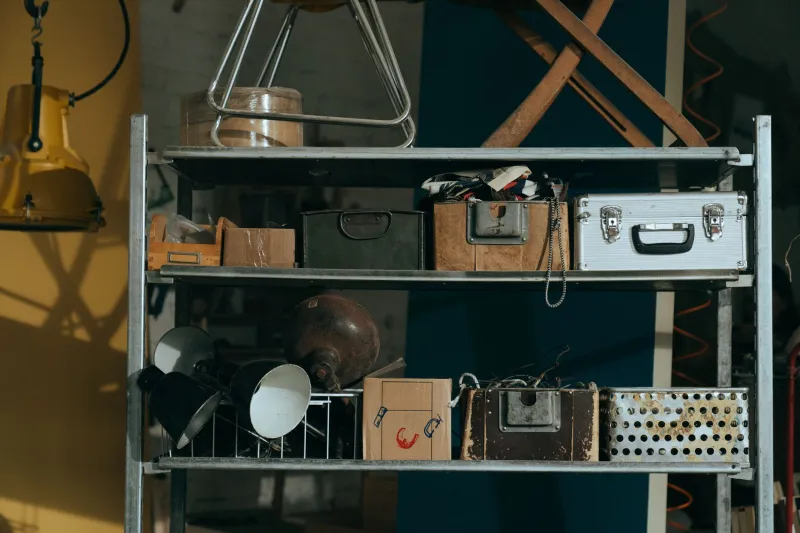
There's a corner of the internet — actually, several corners — dedicated entirely to people showing off their things. Not luxury things, necessarily. Vintage McDonald's Happy Meal toys. Every pressing of a single Smiths record. Ceramic frogs. Matchbooks from diners that closed in 1987. The collections are specific, sometimes baffling, and almost always beautiful in a way that's hard to explain.
And millions of people are watching.
Something shifted in how Americans relate to the objects they own. What used to be a solitary, slightly eccentric hobby has become one of the dominant modes of self-expression in the culture right now. Collecting isn't just collecting anymore. It's identity work.
From the Garage to the Grid
For most of the 20th century, collecting was an intensely private pursuit. You built your thing — baseball cards, vintage cameras, Depression-era glass — and you shared it mostly with other enthusiasts at swap meets or club meetings. The joy was in the hunt and the ownership. The audience, if there was one, was small and self-selected.
Social media didn't just give collectors a bigger audience. It fundamentally changed the incentive structure. When you post a flat lay of your thrifted finds on Instagram, or walk TikTok through your entire collection of 90s Starter jackets, the collection stops being purely personal. It becomes communicative. It's saying something about who you are — or who you want to be seen as.
That's not necessarily a cynical thing. Humans have always used objects to signal belonging and identity. The difference now is that the signal travels further and faster, and the feedback loop is immediate. You post your shelves of vintage Penguin paperbacks and within hours you know exactly how many people find that cool.
Authenticity Is Expensive — So People Started Thrifting
There's a reason so much contemporary collecting runs through thrift stores, estate sales, and flea markets. In a world where every major retailer sells a version of the same aesthetic, finding something genuinely one-of-a-kind carries enormous social currency.
The thrifted object isn't just cheaper. It's proof of taste. It signals that you didn't just buy the curated version — you found yours. That distinction matters a lot to a generation that grew up watching brands co-opt every subculture the moment it got interesting.
Vintage and secondhand collecting has exploded across the US in the last decade. Platforms like Depop, Poshmark, and Etsy formalized what used to happen at Goodwill into a whole economy. But even as the marketplace got more sophisticated, the underlying desire stayed the same: people want things that feel real, specific, and a little bit hard to replicate.
The irony, of course, is that once something becomes collectible enough, it gets expensive fast. Vintage Levi's that sat in a bin for a dollar in 2012 now have their own resale infrastructure and price guides. The authentic thing gets absorbed into the market it was originally escaping.
The Digital Shelf Is Real, Too
Collecting isn't only physical anymore. People curate Spotify playlists with the same obsessive care they'd give a record collection. They maintain meticulously organized Pinterest boards, screenshot archives, digital mood boards, and saved folders that function as aesthetic autobiographies.
Some people collect in explicitly digital forms — NFTs had a moment (complicated, to put it charitably), but the impulse behind them was genuine: the desire to own something rare and to have that ownership mean something. Even without blockchain, the idea of a digital collection that reflects personal taste is completely normal now. Your saved posts, your Letterboxd diary, your carefully curated following list — these are all collections.
What this suggests is that the need driving all of this isn't really about objects at all. It's about curation. It's about the act of choosing, over and over, the things that resonate — and then arranging them in a way that adds up to something coherent.
When Accumulation Becomes Anxiety
Not all of this is entirely comfortable to look at straight-on. The same culture that celebrates the collector also produces a lot of content about overwhelm, clutter, and the suffocating weight of too much stuff. Marie Kondo became a phenomenon for a reason. The minimalism movement didn't emerge in a vacuum.
There's a real tension between the joy of accumulation and the anxiety it can produce. For every person who feels genuinely grounded by their collection of vintage cameras or handmade ceramics, there's someone else who bought a lot of things trying to feel something and ended up with shelves full of stuff that doesn't quite add up to a self.
Social media accelerates this. The algorithm rewards novelty, which means collectors are implicitly pushed to keep acquiring — new finds, new hauls, new additions — rather than sitting with what they have. The collection is never finished because a finished collection doesn't generate content.
This is where the performative and the personal start to pull in opposite directions. The collection that's genuinely yours is built slowly, idiosyncratically, with pieces that mean something specific to you. The collection that performs well online tends to be more legible, more aesthetic, more instantly appealing to a broad audience. Those aren't always the same thing.
What the Stuff Is Actually Saying
Strip away the content strategy and the aesthetic curation, and what's left is something pretty human. People have always built identity through the things they love. The kid who had every issue of a comic book series, the person who kept every concert ticket stub, the grandparent with a shelf of ceramic owls — they were all doing a version of the same thing. Saying: this is what I cared about. This is what I paid attention to. This is me.
The difference now is that the audience for that statement has expanded enormously, and with it, the stakes. When your collection is private, it only has to satisfy you. When it's on the internet, it's in conversation with everyone else's collection, everyone else's taste, everyone else's version of what's worth caring about.
That's a lot of pressure to put on a shelf of vintage glass or a folder of saved images. But it also explains why collecting has become so central to how people express themselves right now. In a world where so much feels standardized and algorithm-smoothed, the specific, accumulated, particular things you love are one of the few places left that feel genuinely yours.
Even if you post them for everyone to see.