Nobody Loiters Anymore: The Strange Afterlife of the American Hangout Spot
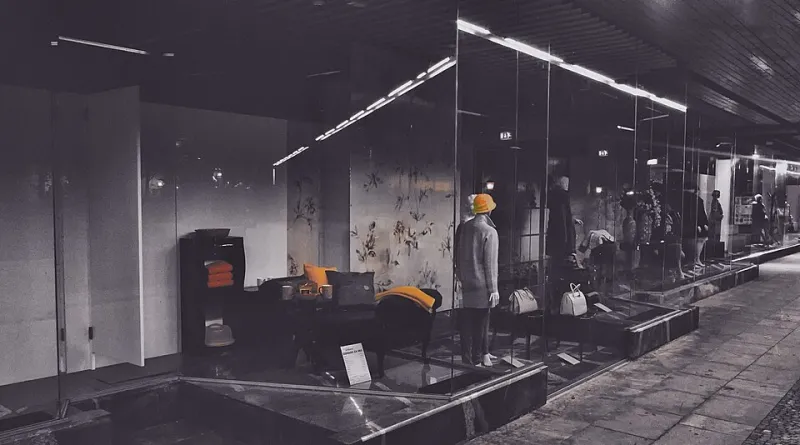
Photo: Tom Mrazek, CC BY 3.0, via Wikimedia Commons
There's a particular kind of sadness in a dead mall. Not the dramatic sadness of a wrecking ball, but the quiet kind — the wet carpet smell, the faded sale banners, the one Auntie Anne's still somehow operating in a food court that seats four hundred. If you're a certain age, you remember when that food court was the center of the known universe.
Sociologist Ray Oldenburg coined the term "third place" back in 1989: not home, not work, but the in-between space where community actually happens. The barbershop. The bowling league. The diner counter where the waitress knew your order before you sat down. By almost every measure, those spaces are dying. And the question worth asking isn't just why — it's what's growing in the cracks.
The Places That Held Us Together Didn't Vanish Overnight
The decline had help. Malls got gut-punched by e-commerce. Independent diners got squeezed by rising rents and delivery apps that turned them into ghost kitchens. Block parties, honestly, got killed by the group chat — why knock on doors when the HOA has a Facebook page?
But there's a deeper force at work, and it's uncomfortable to say out loud: we stopped showing up. Third places require loitering. They require being physically present with no transaction attached, no reservation, no purpose. Loitering, it turns out, is the entire point — and it's also the thing modern American life is engineered to eliminate. Every app on your phone is designed to make staying home feel like the sensible choice.
Then there's the money angle. Paying $12 for a coffee and sitting there for three hours? That's a business model failure. Cafés literally design chairs to be uncomfortable now. The unspoken deal of the third place — buy one thing, stay indefinitely — stopped penciling out for everyone.
Enter the Run Club, the Discord Server, and Yes, the Gym
Here's where the story gets interesting, because the third place didn't die so much as mutate. Look around and you'll see community being rebuilt in places nobody in 1989 would have predicted.
Run clubs are the obvious headline. What started as solo cardio has exploded into something closer to a social institution — city running crews in New York, Chicago, and Austin that draw hundreds of people for a 5K followed by coffee and, let's be honest, beer. Nobody's there for the splits. They're there because it's a scheduled, recurring, in-person reason to leave the house, and that turns out to be the scarcest resource in America.
The gym went through the same transformation. Planet Fitness sells a $10 membership, but boutique fitness — the run clubs, the climbing gyms, the yoga studios with cold plunges — sells belonging. Your Barry's Bootcamp membership is functionally a country club with burpees.
And then there's the strangest third place of all: the one with no physical location at all. Discord servers for niche video games. Group chats that never sleep. Fan conventions that draw tens of thousands of people who've known each other online for years and are meeting in person for the first time. It sounds dystopian until you watch a 19-year-old hug a stranger they've gamed with nightly since high school. The community is real. The venue just moved.
Loneliness Is a Market, and Business Knows It
Here's the cynical footnote, because there always is one. Investors noticed that Americans are lonely, and loneliness is a growth industry. Social clubs with waitlists and $200 monthly dues. Supper clubs you apply to join. Apps for making friends that are, structurally, just dating apps with a different landing page.
Some of this is fine! Entrepreneurs solving a real problem with a real product is how most good things get built. But there's a difference between a third place and a third place with a paywall. Oldenburg's original vision was defined partly by its low barriers — the regulars, the levity, the fact that anyone could show up. A $150-a-month social club where you "apply with your Instagram" is a lot of things, but it's not that.
The genuinely hopeful signs are the scrappy, unglamorous ones. The chess club at the public library that doubled in size. The pickup basketball game that's been running at the same park for thirty years. The vintage store that put a few chairs out front and accidentally became a neighborhood living room. None of these trend on TikTok. All of them are packed.
The Takeaway: Show Up Somewhere Boring
The lesson from the third place's weird afterlife isn't that community is gone. It's that community now requires initiative. The diner counter didn't need you to organize anything — it was just there. The run club needs you to sign up. The Discord needs you to say something. The park needs you to bring the ball.
So find your version of it. It doesn't have to be cool. It barely has to be good. The magic of the old third places was never the coffee — and everyone knew the coffee was bad. It was that you kept showing up, and so did everyone else, and eventually that stopped being nothing and started being something.
Long live the third place. Whoever's hosting it this decade.