Where Did Everyone Go? The Quiet Crisis of American Friendship

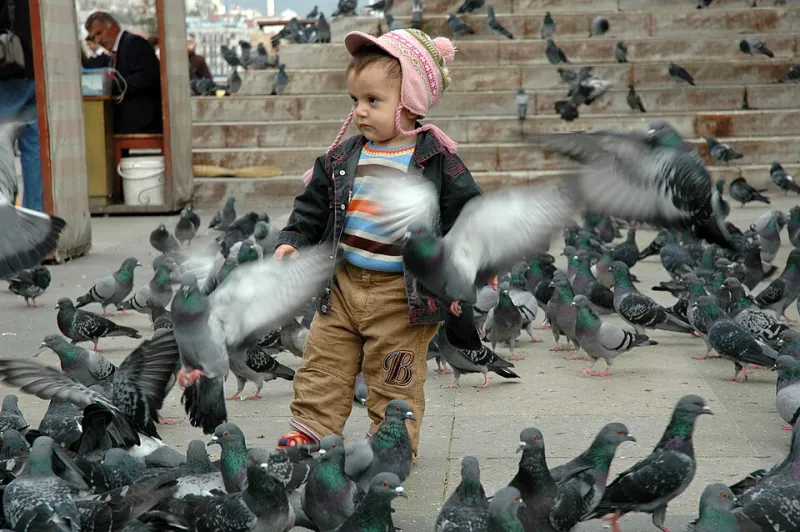
Photo: Matthew Henry matthewhenry, CC0, via Wikimedia Commons
At some point in your thirties—or maybe your late twenties, if you got there early—you probably noticed it. The group chat went quiet. The friend you used to see every other week became someone you liked on Instagram. Catching up started requiring a calendar invite, and then the calendar invite started getting rescheduled. And then one day you looked up and realized you couldn't name three people you'd call in an actual emergency.
You're not imagining it. And you're not alone in being alone.
The Numbers Are Genuinely Alarming
The data on American friendship has been trending in one direction for a while now, and it isn't a hopeful one. A 2021 Survey Center on American Life report found that the share of Americans with no close friends had quadrupled since 1990—going from 3% to 12%. Men have been hit hardest: 15% reported having no close friendships at all, up from just 3% three decades earlier.
The American Surgeon General issued an advisory in 2023 calling loneliness a public health epidemic, comparing its health effects to smoking 15 cigarettes a day. That's not a metaphor designed to be dramatic. Chronic loneliness is linked to higher rates of heart disease, dementia, depression, and premature death. The surgeon general of the United States is telling us that not having friends is killing people.
So how did we get here?
A Slow Unraveling, Not a Single Cause
It would be convenient if there were one villain in this story. There isn't. The friendship recession is the product of a dozen overlapping shifts that have been quietly compounding for decades.
Suburbanization spread people out and made spontaneous connection harder. Car culture eliminated the kind of incidental social contact that pedestrian cities generate. The decline of third places—the bars, churches, bowling leagues, union halls, and community centers that once served as informal gathering infrastructure—left people with fewer places to just be around other people without an agenda.
Then came the digital layer. Social media gave us the aesthetic of connection without much of the substance. We know what our acquaintances had for dinner. We watched their vacation. We liked their engagement announcement. But none of that is friendship—it's spectatorship. The feeds created the sensation of being socially current while actually replacing the friction-full, time-consuming work that real relationships require.
Hybrid work added another layer. The office, for all its frustrations, was one of the last reliable places where adults encountered other adults regularly, without having to plan it. Remote and hybrid arrangements have been genuinely good for productivity and work-life balance for many people—but they've also quietly eliminated the ambient social contact that used to generate friendships almost by accident.
And dating app culture, while designed for romantic connection, has arguably bled into how people think about all relationships: transactional, optimizable, always with one eye on whether something better might be a swipe away.
The Myth of the Social Media Safety Net
One of the more insidious parts of this crisis is how invisible it is. Because we are, by almost every metric, more connected than any generation in history—more followers, more contacts, more group chats, more platforms—the loneliness feels almost embarrassing to admit. Shouldn't all this connectivity be working?
But connection and closeness are different things. You can have 1,400 Instagram followers and no one to call when your parent gets a bad diagnosis. You can be active in six different group chats and still feel like you're performing friendship rather than having it.
Researchers distinguish between weak ties (acquaintances, followers, colleagues) and strong ties (close friends, people you're genuinely vulnerable with). Social media is extraordinary at multiplying weak ties. It does almost nothing to build strong ones. And it's the strong ties that determine whether you feel lonely.
What People Are Actually Trying
Here's where the story gets more interesting, and more human. Because Americans aren't just sitting with this—they're experimenting, sometimes awkwardly, sometimes brilliantly, with ways to rebuild what got lost.
Friendship coaches—yes, that's a real profession now—are booking out months in advance. These are practitioners who help adults navigate the surprisingly complex work of making and maintaining friends past age 30: how to initiate without seeming desperate, how to deepen a surface-level acquaintance, how to show up consistently enough that trust actually forms. The fact that people are paying for this help says something both sad and hopeful about where we are.
Intentional communities and co-living spaces aimed at adults (not just broke twenty-somethings) are quietly expanding across major American cities. These aren't communes in the 1970s sense—they're well-designed apartments and townhomes built around shared common spaces and structured social programming, explicitly designed to make neighborly relationships more likely. Demand has been growing faster than supply.
Friendship apps like Bumble BFF and newer entrants like Meetup and Timeleft are finding real audiences among people who've decided that waiting for organic connection isn't working anymore. Timeleft, which randomly assigns strangers to Wednesday dinners at local restaurants, has expanded to dozens of American cities. The reviews are, genuinely, mostly good.
And then there's the low-tech stuff, which might be the most effective of all: people are throwing more parties. Hosting recurring dinners. Starting book clubs that are mostly excuses to drink wine together. Joining recreational sports leagues not because they care about pickleball but because they need a standing weekly reason to see the same people.
Permission to Be Intentional About This
Maybe the most useful thing that's come out of the national conversation about loneliness is the slow erosion of the idea that adult friendships should just happen naturally. That's a lie we've been telling ourselves, probably because the alternative—that you have to work at friendship the same way you work at a relationship or a career—feels undignified somehow.
But the people who have strong friendships in their thirties and forties almost universally made them on purpose. They kept showing up. They over-communicated. They made the plan and then actually kept it. They chose people and let those people know they were chosen.
None of that is as romantic as the friendships that formed effortlessly in college dorms or childhood neighborhoods. But it might be more real, because it's a choice made by adults who know what they're doing and why.
The friendship recession is real. But recessions end. And the people already building their way out of this one aren't waiting for conditions to improve on their own.