Doing Absolutely Nothing Is Now a Flex—And It'll Cost You
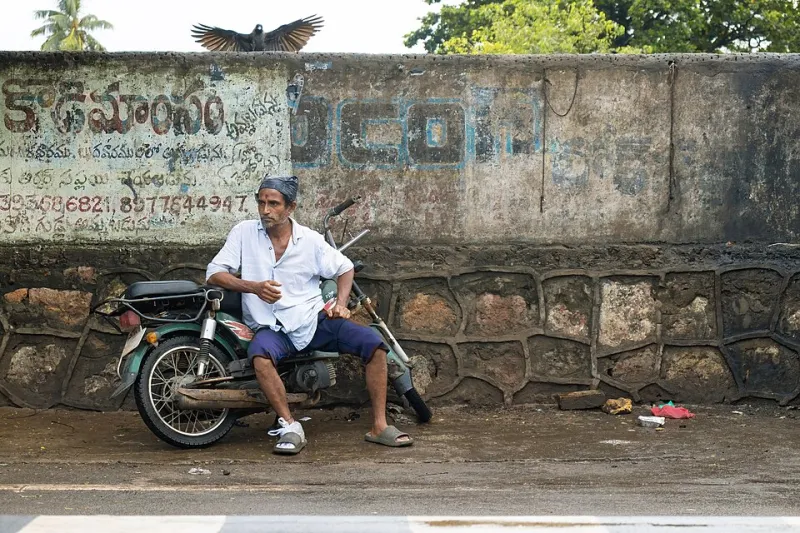
Photo: iMahesh, CC BY-SA 4.0, via Wikimedia Commons
Not long ago, the most admired person in any room was the busiest one. The one with back-to-back meetings, the red-eye flights, the "I'll sleep when I'm dead" energy. Hustle was the language of ambition, and exhaustion was its proof of concept. But somewhere in the rubble of pandemic-era burnout and a cultural reckoning with what productivity actually costs us, something shifted. The new status symbol isn't your schedule. It's your spaciousness.
Welcome to the era of intentional idleness—where the most powerful thing you can do is absolutely nothing, and where that nothing comes with a surprisingly steep price tag.
The Slow Living Retreat Is the New Corner Office
Spend any time on the more aspirational corners of Instagram or TikTok and you'll notice a pattern. The accounts with the most cultural cachet aren't showcasing hustle. They're showcasing pause. A ceramic mug on a linen-draped table. A morning walk with no destination. A week at a digital detox retreat in the Hudson Valley where your phone is locked in a wooden box and you spend three days journaling and eating farm-to-table meals in silence.
These retreats are real, and they're booming. Places like Miraval in Arizona or the various "screen-free" wellness escapes popping up across New England aren't cheap—we're talking anywhere from $500 to several thousand dollars per night. The clientele isn't people who've given up. It's people who've arrived. CEOs, creatives, and the culturally connected are paying serious money to practice the radical act of not checking their email.
And that's the central paradox here: doing less has become a luxury product.
Boredom as a Marker of Privilege
There's a reason philosophers and economists have long noted that leisure is a class signal. Thorstein Veblen was writing about "conspicuous leisure" back in 1899, but the concept has never felt more alive than it does right now. When time is your most finite resource, choosing to spend it unproductively—intentionally, visibly—communicates that you have enough of everything else.
This isn't just theoretical. Think about who actually gets to be bored in America today. For a huge portion of the population, doing nothing isn't a lifestyle choice—it's an impossibility. Gig workers, caregivers, hourly employees, anyone juggling multiple jobs: stillness is a fantasy, not a philosophy. The freedom to disengage, to detox, to slow down, requires financial cushion, flexible work, and a support system that most Americans simply don't have.
So when a wellness influencer posts about their "slow morning" that begins at 9 a.m. after a full night's sleep and no alarm, there's an unspoken reality embedded in that content: this is what having options looks like.
The Aesthetics of Emptiness
What makes this cultural moment particularly interesting is that it has developed its own visual language—and that language is expensive to produce. The slow living aesthetic favors natural fibers, uncluttered spaces, analog objects (film cameras, physical books, vinyl records), and an overall sense of calm that requires, ironically, a lot of curation.
There's a cottage industry built around helping people look like they're not trying. Linen bedding that costs $400. A $60 beeswax candle. A journaling practice that involves a $30 Leuchtturm notebook and a $180 Lamy pen. The minimalism isn't actually minimal—it's just minimal in a very specific, tasteful, financially demanding way.
Even the social media detox has been aestheticized. Logging off is now a content event. People announce their departures, document their analog replacements, and return with reflective posts about what they discovered in the silence. The detox becomes its own form of performance, which raises a genuinely interesting question: can you truly opt out of the attention economy while still narrating your opting out for an audience?
What Hustle Culture Actually Lost
To be fair, the backlash against hustle culture isn't entirely cynical or performative. There's something real underneath it. The "rise and grind" era produced genuine damage—anxiety, burnout, a generation of people who tied their self-worth entirely to their output and then collapsed when that output faltered. The Great Resignation wasn't just about wages. It was about people recalibrating what they were actually working for.
In that context, the slow living movement represents a legitimate cultural correction. Rest isn't laziness. Boredom has cognitive benefits—it's linked to creativity, self-reflection, and emotional regulation. Neuroscience has been making this case for years, and it's finally breaking through into mainstream conversation in a meaningful way.
The problem isn't the philosophy. The problem is the packaging—and who gets access to it.
Redefining Success Without Gatekeeping It
Here's where it gets genuinely complicated. The ideals at the heart of slow living—presence, rest, meaningful connection, freedom from the tyranny of productivity—are not inherently elitist. They're human. But the cultural infrastructure that's built up around them often is.
What would it look like to democratize intentional idleness? Some advocates point to policy: better labor protections, mandatory paid leave, a cultural shift in how employers treat time off. Others focus on the small, accessible version—a ten-minute phone-free walk, an afternoon without a to-do list, permission to be bored on a Tuesday.
The most honest version of this conversation acknowledges both things at once: that rest and stillness are genuinely valuable, and that right now, the people who get to make them a lifestyle are a pretty specific group.
Maybe the real status symbol isn't the $3,000 retreat or the perfectly curated slow morning. Maybe it's a society where doing nothing, even occasionally, isn't a luxury at all—just a given. We're not there yet. But the fact that we're having this conversation at all suggests we're at least asking the right questions.